

Accessibility is a spectrum, not a checkbox
There’s a version of accessibility that looks neat on paper. A box ticked, a policy written down.
But disabled people’s lives rarely fit that neatly, and accessibility can fall apart when people make assumptions about who we are, what we need, and how we want to take part.
That might mean assuming a wheelchair user wants to be seated away from their friends. It might mean assuming a young parent cannot possibly need the disabled toilet. It might mean deciding, without asking, who needs help, who wants privacy, who should sit where, and who looks disabled enough.
That’s where the checkbox starts to fail.
Accessibility is a spectrum of needs, preferences, bodies, conditions, identities and circumstances. When people make assumptions instead of asking questions, disabled people can be left feeling singled out, isolated or judged.
Inclusion means staying part of the group
Tanvi Vyas shared an example that will feel familiar to many wheelchair users, especially those of us who often go out with non-disabled friends, family or colleagues.
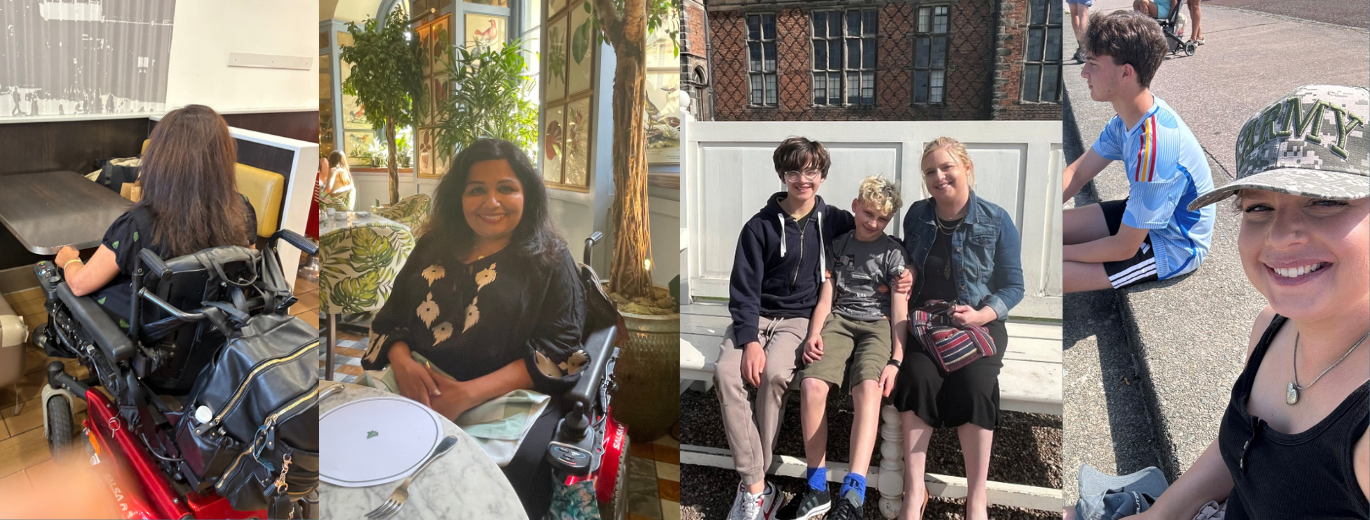
She often goes out in larger groups and can sometimes be the only wheelchair user attending. In the past, after she had simply mentioned that wheelchair access was needed, venues assumed she would want a quiet space, out of the way, and very close to the toilet.
The venue may have thought it was helping, but the outcome was separation.
Tanvi’s group was split up, and she felt isolated. People kept checking in on her as though she needed looking after, when what she really wanted was to enjoy the night out with everyone else.
As a wheelchair user, I understand this so deeply. Accessibility doesn’t mean being tucked away somewhere separate, being placed where staff think you will be easiest to manage, being treated as though your presence changes the shape of everyone else’s evening.
A quieter table, a shorter route or a seat near the toilet might be exactly what someone asks for, but the point is that they should be asked.
For Tanvi, inclusion matters because it makes her feel valued and makes her want to return. The right attitude, and the right questions upfront, can help create a smooth and enjoyable experience for everyone.
“Where would you like to sit?” is a much better starting point than “We’ve put you over here.”
Disability doesn’t have one look
Natalie Gardner’s story shows another side of the same problem.
Natalie has been chronically ill and disabled since she was diagnosed with rheumatoid arthritis at 15 months old. She also lives with Crohn’s Disease and other chronic conditions and now has an ileostomy.
Yet because Natalie hasn’t always matched other people’s idea of what disability looks like, she’s been questioned more than once for using accessible toilet facilities.
One experience has stayed with her for more than 10 years.
During half term, while in a severe Crohn’s flare, she took her two boys on a day out by train. When they arrived, she urgently needed the toilet. Anyone with Crohn’s Disease will know that waiting simply is not an option.
Natalie dashed into the accessible toilet with her boys and sat there feeling horrific, while trying to keep them entertained because they wanted to get on with the visit.
Then someone knocked on the door. A manager said they wanted to check she was okay. Natalie wasn’t really okay, but she reassured them and said she would be out as soon as possible.
When she left, a wheelchair user and her husband were outside, glaring at her. They said loudly enough for her to hear: “This is a disabled bathroom.”
Natalie replied: “I am well aware.”
The manager was kind, apologetic and more concerned about Natalie’s wellbeing, but the interaction has stayed with her. The couple had seen her go in with her children and assumed she could not possibly be disabled.
That assumption hurt. It happened in front of her boys, which made it even more difficult and upsetting.
Natalie has always wanted her children to have the same experiences and adventures as their friends. Accessible toilets make that possible. They make it easier for her to do the things other parents are doing, especially when her health is unpredictable and urgent access to facilities can shape an entire day.
Neat categories cause harm
People often sort disability into blunt categories: visible or invisible, independent or needing help, disabled or not disabled enough.
Real life is far more complicated.
A young parent can need a disabled toilet. A wheelchair user can want to sit with their friends. A person who looks fine can be in severe pain. A disabled person can be independent and still need adjustments. Someone can need support in one situation and none at all in another.
None of that makes their access needs less valid.
A facility can exist and still feel unsafe, uncomfortable or hostile if disabled people have to defend their right to use it. A venue can have accessible seating and still get inclusion wrong if it separates people from their group. A staff member can mean well and still make someone feel managed rather than welcomed.
That is why accessibility can never be reduced to one symbol, one facility, one policy or one assumption.
Accessible toilets are not only for wheelchair users. Accessible spaces are not only for people who look a certain way. Assistance should not be based on guesswork. And inclusion should never depend on whether someone fits a stranger’s idea of disability.
Ask, believe, include
Both Tanvi and Natalie’s stories come back to the same point: accessibility works better when people ask instead of assume.
It can be as simple as asking where someone would prefer to sit, whether they need anything specific, or whether the information already provided reflects what they actually need.
For venues, that means moving beyond the checkbox and thinking about the human experience. Accessibility information matters, but attitude matters too. Staff confidence matters. Respectful communication matters. So does understanding that disabled people are not all the same.
AccessAble’s Detailed Access Guides help remove some of that guesswork by showing practical access information clearly, rather than asking disabled people to fit someone else’s assumptions.
But this is also about culture. When disabled people tell you what we need, believe us. When you are not sure, ask. When you are making decisions that affect our experience, include us without separating, questioning or judging us first.
Because accessibility is a spectrum, not a checkbox, and disabled people should not have to prove where we sit on it before we are treated with respect.