
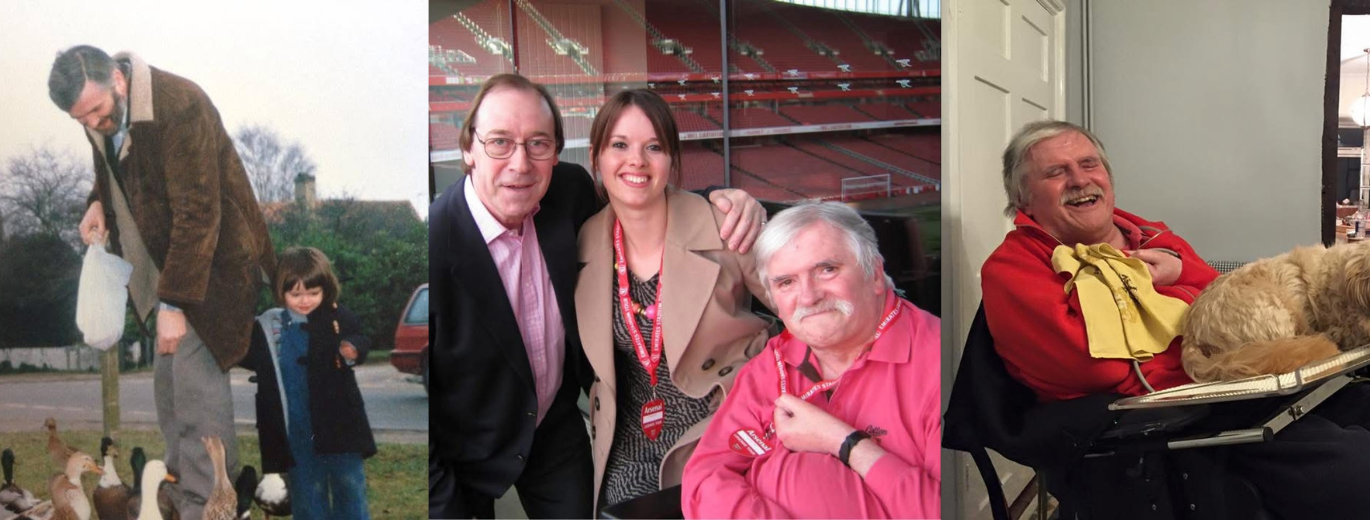
Growing Up Caring
Growing up as a child carer shapes your childhood in ways you only realise later. Caring for a family member exposes you to accessibility challenges, attitudinal barriers, and everyday injustices, long before you can put them into words. Here’s my experience and why recognising and supporting child carers matters.
I didn’t know I was a child carer
I didn’t know I was a child carer until someone told me. To me, caring for my dad was just part of my day-to-day life, as normal as school runs, homework, or Saturday mornings in front of the TV.
It was only later that I learned the definition:
“A young carer is someone aged under 18 who cares for a friend or family member who, due to illness, disability, a mental health problem or an addiction, cannot cope without their support.” (Carers Trust)
When you grow up in that role, you don’t stop to compare your life to other children’s. You adapt. You learn how to make things work. Only when you look around, or, more often, look back, do you realise you experienced things that weren’t average for your age.
A child’s perspective
Since having my son, I have become acutely aware of how differently children and adults think about ‘disability’. My 8-year-old has asked countless questions about his “Grampee” what he liked to eat, what sports he played, if he would be proud, but only once has he asked why he used a wheelchair. And at just five years old, he could tell you plainly: “It’s so he can get around and do stuff.” No judgment, no discomfort, just curiosity followed by acceptance.
Seeing barriers and creating inclusive experiences
My dad had MS and was a full-time wheelchair user by the time I was 5. Helping care for my dad gave me a front-row seat to ignorance and inaccessibility. I saw discrimination, stereotyping and prejudice long before I could label them.
Don’t get me wrong, there was a lot of joy and laughter, travelling to Emirates to watch Arsenal, visiting UK cathedrals, my dad’s dry sense of humour when someone rear ended the car and his retort to their understandable worry was "well, I was fine when I got in" or the time I inadvertently locked him in an accessible toilet and didn’t have a RADAR key with me.
However, life was a resilience test. Community, travel, healthcare, and experiences weren’t set up for a family like ours. My university graduation, for example, was held in a building where my dad had to venture via the bins and kitchens to attend. In restaurants, I was asked what my dad wanted to eat, and in healthcare, we too often had to educate people that a disabled person’s life is of equal value.
“Caring for my dad shaped who I am. It made me notice what others miss, and it gave me a determination to push for a more accessible, equitable world.”
But it also meant missing out on ordinary experiences, facing everyday prejudice, and fighting for recognition and support.
The hidden reality for many children in the UK
The 2021 Census said there were approximately 120,000 young carers, aged between 5 and 17 years, in England and 8,200 in Wales (Carers Trust).
Child carers often navigate situations most adults never face, managing medication, providing intimate care, helping manage finances and household logistics, all before they’ve even sat their GCSEs.
Make accessibility and inclusion the norm, so families can participate fully together, recognising the needs and presence of disabled parents and guardians.
Why we must do better
We need to:
- Identify child carers earlier, so support reaches them before they burn out.
- Provide consistent, trusted support in schools, communities, and healthcare settings.
- Make accessibility and inclusion the norm, so families can participate fully together, recognising the needs and presence of disabled parents.
- Challenge prejudice and assumptions - the attitudinal barriers that can be more damaging than the physical ones.
Caring for my dad shaped who I am. I recognise that I was in a privileged position: my mum, as the primary carer, enabled me to access education and opportunities that many young carers miss. We must support children who do not have that luxury, so they can thrive, fulfil their potential, and be recognised for the willing sacrifices they make every day. No child should have to watch opportunities slip away because society hasn’t caught up.
We can do better - and we must.
For more information on support and current campaigns, please visit:
https://carers.org/about-caring/about-young-carers
https://www.carersuk.org/news-and-campaigns/our-campaigns/
https://www.carersfirst.org.uk/about-us/what-we-do/campaigns/