

Workplace accessibility for Disabled employees: Why accessible workplaces matter
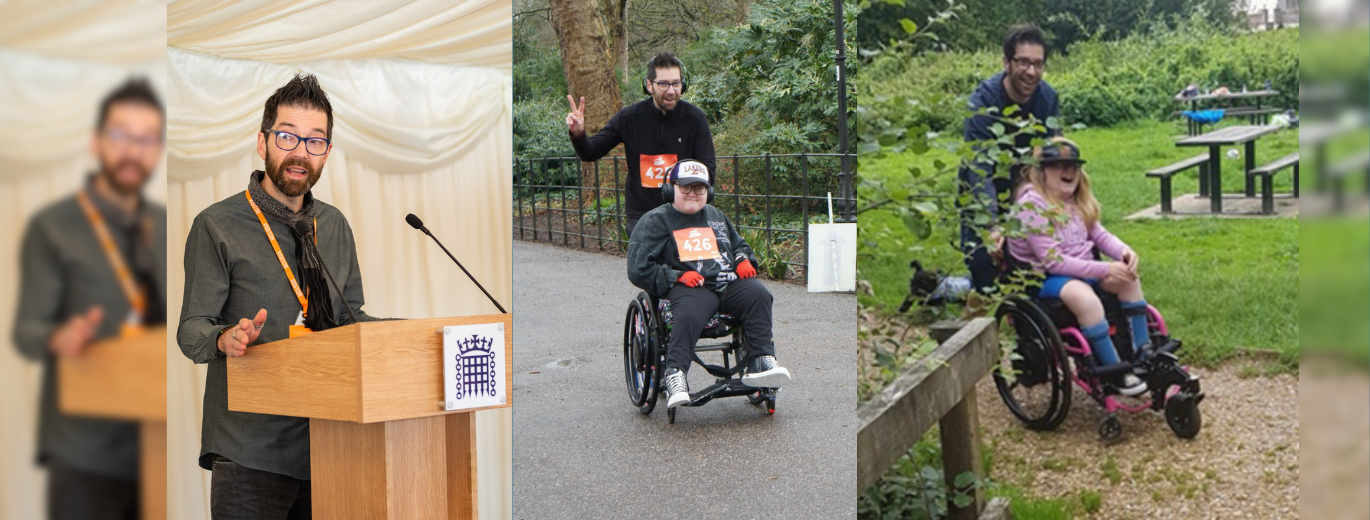
My name is Dan White. I am a Policy and Campaigns Officer at Disability Rights UK, an unpaid carer to my daughter, and I live with hidden disabilities - namely autism, ADHD and depression.
Work is often positioned by government as a cure to all ills; however, this is a political viewpoint that does not reflect the reality for many Disabled people.
That said, when employers understand disability and actively build in flexibility, adjustments, and trust, work can become a supportive and empowering environment. Done well, it allows for fluctuating needs and enables Disabled people not just to participate, but to thrive.
There is some irony in writing about workplace accessibility, as I also campaign for improved disability employment. At a Disabled People’s Organisation like Disability Rights UK, it is expected that accessibility is embedded into the culture—and I am fortunate that it is. My experience has not always been this positive.
My experience
In previous roles, particularly in retail, I encountered barriers around disclosure, felt pressure to mask my disabilities, and often found that employers did not understand my needs. This had a significant negative impact on my mental health as putting on a happy face to the general public was mandatory.
Within my work now, being neurodivergent and living with depression can still make my decision-making complex. These conditions still affect how I process information, how quickly I can respond, and how consistent that capacity is over time. ADHD can make prioritisation and organisation difficult, while autism means I benefit from clear, structured information and additional time to process complexity or ambiguity. Depression can further affect confidence, energy, and cognitive speed. When these overlap, it can lead to cognitive overload and fatigue, particularly in fast-paced or unpredictable environments.
At Disability Rights UK, I am supported to work with these disabilities, rather than against them as I was once was. I work mainly from home and while there is a standard 37-hour working week, it is not rigidly structured. Flexibility is essential, particularly as care responsibilities and mental health do not follow fixed schedules. This approach allows me to manage my workload in a way that is sustainable and effective. However, challenges arise when I am required to attend external events such as parliamentary meetings, conferences, and demonstrations. These environments and venues are often unfamiliar, busy, and not always designed with accessibility in mind.
Firstly, travel is a significant barrier. Crowded trains, noise, delays, and lack of seating can be overwhelming and exhausting before the event has even begun. This can impact my ability to engage fully on arrival, especially where there is no opportunity for rest or access to quiet space. Noise reducing headphones are essential.
Unfamiliar venues also often lack clear information in advance. Details about layout, lighting, noise levels, or entry processes are not always available. This unpredictability increases anxiety and makes it harder to prepare. For someone already managing sensory and cognitive load, this can be a substantial barrier.
Within these venues, sensory environments are often overlooked. Bright lighting, echoing rooms, and crowded spaces can be highly overstimulating. Without access to quiet areas or the ability to step away without judgement, it can be difficult to maintain focus and wellbeing. If a quiet place cannot be found, I usually demand one, if I am not already overwhelmed.
Networking, while essential to my work, presents additional challenges. Events often rely on unstructured, high-pressure social interaction, where expectations are unclear and initiating conversation is necessary. While I value these opportunities, more structured approaches—such as clear agendas, defined roles, and alternative ways to contribute—would make participation more accessible for me and many others. A networking event after a trying journey and a lack of venue information is useless to me.
The work I do on Access to Work highlights how some of these challenges could be addressed more effectively. While the scheme has the potential to be transformative, it is currently falling short due to delays, administrative barriers, and reductions in support. If co-designed with Disabled people, Access to Work could play a much stronger role in supporting people to enter and remain in employment.
Access information
But until I have worked a miracle in restructuring the scheme, AccessAble’s Detailed Access Guides prove invaluable. These guides provide clear, factual information about venues, covering the full journey through a space—from parking and entrances to layout and facilities. By offering detailed descriptions and visual references, they remove uncertainty and allow Disabled people to make informed decisions about whether a space will meet their needs.
In the meantime, employers still have a critical role to play. They can better support Disabled employees by adopting a proactive, flexible, and individualised approach. This includes embedding flexible working as standard, regularly reviewing adjustments, and extending accessibility considerations beyond the workplace itself to include travel and external engagements. Employers should also reduce the burden of self-advocacy by proactively offering support, ensuring managers are trained in disability and neurodiversity, and creating systems where adjustments are understood and consistently applied. Clear communication, structured processes, and outcome-focused performance measures can remove unnecessary barriers, while an inclusive culture—where breaks, different working styles, and adjustments are normalised—allows Disabled employees to thrive.
Work should be a supportive and enabling experience, not a stressful or exclusionary one. With the right understanding, practical adjustments, and commitment to inclusion, it can be. While ATW remains broken, access guides and employer responsibility must be the way to go, or work for those who can and want to will still be a place of potential ableism, ignorance and frustration.